
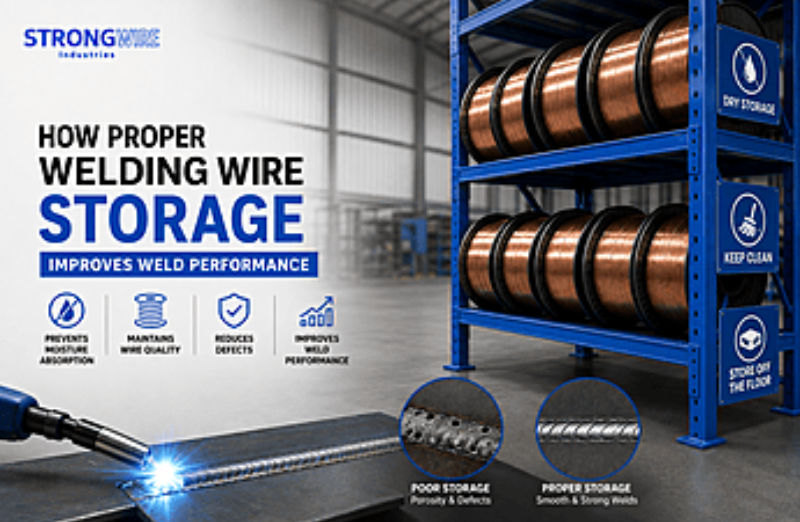
Welding quality depends on more than the welding machine, operator skill, and welding parameters. One often-overlooked factor is how welding wire is stored before use. Even premium-quality welding wire can produce poor welds if it absorbs moisture, collects contaminants, or suffers physical damage during storage.
Whether you operate a fabrication workshop, automotive plant, construction project, or heavy engineering facility, implementing proper welding consumables storage practices helps maintain consistent weld quality, reduces rework, and improves production efficiency.
In this guide, we’ll explain why proper welding wire storage matters, the common storage mistakes to avoid, and the best practices recommended by experienced welding wire manufacturers.
Why Welding Wire Storage Matters
Welding wire is engineered to deliver consistent chemical composition, stable arc characteristics, and reliable mechanical properties. However, improper storage can compromise these qualities before the wire even reaches the welding torch.
Poor storage may lead to:
- Moisture contamination
- Surface oxidation
- Rust formation
- Dust and dirt accumulation
- Wire feeding problems
- Increased welding defects
- Lower weld strength
- Higher production costs
Proper storage protects the integrity of the wire and ensures every weld meets quality expectations.
How Improper Storage Affects Weld Performance
1. Moisture Causes Porosity
One of the biggest enemies of welding wire is moisture.
When wire absorbs moisture or develops surface rust, hydrogen can enter the weld pool during welding. This often results in:
- Weld porosity
- Pinholes
- Internal voids
- Reduced weld strength
- Increased repair work
Proper storage significantly reduces these risks.
2. Rust Leads to Poor Arc Stability
Even slight oxidation affects electrical conductivity.
Rusty welding wire may cause:
- Arc instability
- Excessive spatter
- Inconsistent penetration
- Poor bead appearance
- Interrupted wire feeding
Quality welding wire manufacturers in India recommend using only clean, rust-free wire for critical welding applications.
3. Dirt and Oil Cause Weld Contamination
If welding wire is exposed to workshop dust, grease, cutting fluids, or oil, contaminants enter the weld pool.
This can cause:
- Slag inclusions
- Surface defects
- Poor fusion
- Reduced mechanical properties
- Increased inspection failures
Keeping wire sealed until use helps prevent contamination.
4. Damaged Wire Causes Feeding Issues
Incorrect storage may deform wire spools.
Bent or damaged wire can result in:
- Bird nesting
- Wire jams
- Uneven wire feed
- Production downtime
- Higher consumable waste
Proper handling preserves spool shape and improves welding efficiency.
Best Practices for Welding Consumables Storage
Following industry-recommended storage practices protects welding wire from environmental damage and ensures consistent welding performance.
Store in a Clean, Dry Environment
Always keep welding wire in a controlled indoor environment.
Recommended conditions include:
- Low humidity
- Clean surroundings
- Dust-free storage
- Stable room temperature
- Good ventilation
Avoid storing wire near open doors or windows where humidity can fluctuate.
Keep Wire in Original Packaging
Manufacturers package welding wire to protect it from environmental exposure.
Do not remove packaging until the wire is ready for use.
Original packaging protects against:
- Moisture
- Dust
- Physical damage
- Corrosion
Avoid Direct Floor Contact
Never place welding wire directly on concrete floors.
Concrete can retain moisture that eventually affects stored consumables.
Instead, use:
- Storage racks
- Shelving systems
- Wooden pallets
- Metal storage cabinets
Protect from Temperature Changes
Rapid temperature fluctuations create condensation.
Condensation encourages corrosion and moisture absorption.
Allow welding wire to acclimatize before opening sealed packaging, especially when moving from cold storage to warmer workshops.
Rotate Inventory Using FIFO
Implement a First In, First Out (FIFO) inventory system.
Using older stock first helps prevent long-term storage issues while ensuring product freshness.
Label inventory clearly with:
- Purchase date
- Batch number
- Storage location
Handle Spools Carefully
Avoid:
- Dropping wire spools
- Rolling them across floors
- Stacking them improperly
- Placing heavy objects on top
Physical damage affects feeding performance during welding.
Ideal Storage Conditions for Welding Wire
| Storage Factor | Recommended Practice |
| Environment | Clean and dry |
| Humidity | Low humidity |
| Temperature | Stable room temperature |
| Packaging | Keep sealed until use |
| Storage Position | On racks or shelves |
| Handling | Prevent physical damage |
| Inventory | FIFO rotation |
Signs Your Welding Wire Has Been Improperly Stored
Inspect welding wire before use.
Look for:
- Rust spots
- Discoloration
- Moisture on the spool
- Dust buildup
- Damaged spool edges
- Wire kinks
- Uneven winding
If significant corrosion or contamination is present, replacing the wire is often safer than risking weld defects.
Benefits of Proper Welding Wire Storage
Good storage practices deliver measurable production benefits.
Better Weld Quality
Clean welding wire produces:
- Stable arcs
- Uniform weld beads
- Better penetration
- Reduced porosity
Lower Rework Costs
Fewer welding defects mean:
- Less grinding
- Fewer repairs
- Reduced rejection rates
- Improved productivity
Longer Consumable Life
Correct storage extends shelf life by protecting wire from environmental damage.
This reduces unnecessary material waste.
Improved Equipment Performance
Clean wire feeds smoothly through:
- Wire feeders
- Contact tips
- Liners
This minimizes equipment wear and downtime.
Greater Process Consistency
Consistent consumable quality results in repeatable welding performance across production batches.
Choosing Reliable Welding Wire Manufacturers
Storage is important, but starting with high-quality welding wire is equally essential.
When selecting a supplier, look for manufacturers that provide:
- Consistent wire chemistry
- Strict quality control
- Reliable packaging
- Batch traceability
- Industry certifications
- Technical support
- Proven manufacturing experience
Trusted welding wire manufacturers in India also offer guidance on proper storage, handling, and application to help customers achieve reliable welding performance.
Common Welding Wire Storage Mistakes
Avoid these common errors:
- Opening packages too early
- Storing wire outdoors
- Keeping wire near water sources
- Ignoring humidity control
- Mixing old and new inventory
- Using rusty or contaminated wire
- Dropping wire spools during transport
Preventing these mistakes helps maintain weld quality and reduces production costs.
Storage Tips for Different Industries
Automotive Manufacturing
Maintain climate-controlled storage for precision welding applications where consistency is critical.
Heavy Fabrication
Use dedicated storage rooms to protect large inventories of welding consumables from dust and moisture.
Construction Sites
Store welding wire inside weatherproof containers or portable storage cabinets to reduce exposure to rain and humidity.
Shipbuilding
Because marine environments are highly corrosive, keep welding wire sealed and use dehumidified storage whenever possible.
Conclusion
Proper welding wire storage is a simple yet highly effective way to improve weld quality, reduce defects, and maximize productivity. Protecting welding wire from moisture, contamination, and physical damage ensures consistent performance throughout its service life.
Whether you’re managing a fabrication shop or a large manufacturing facility, following recommended welding consumables storage practices and sourcing products from experienced welding wire manufacturers in India can significantly improve operational efficiency and weld reliability.
Investing in proper storage today helps reduce costly repairs, extend consumable life, and produce stronger, more consistent welds for every project.