
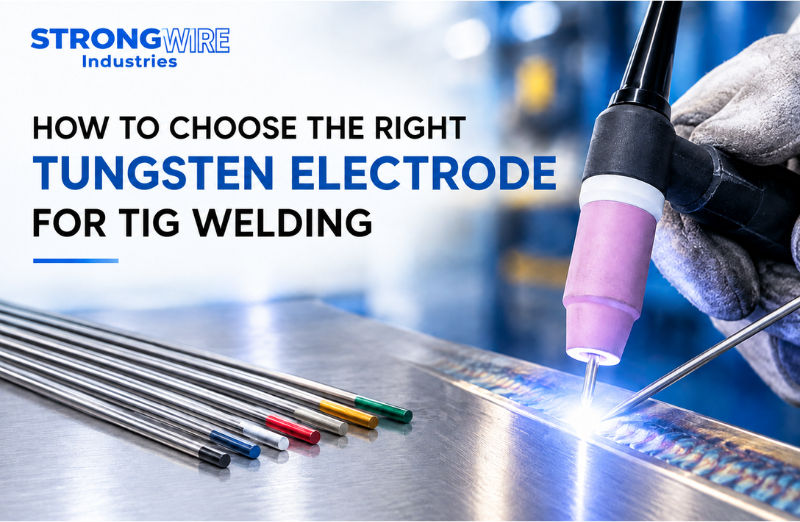
TIG welding is widely used where precision, arc control, and weld quality are critical. From stainless steel fabrication and aerospace components to pressure vessels, automotive parts, and industrial machinery, the choice of welding consumables can directly influence process stability and productivity.
One of the most important consumables in Tungsten Inert Gas welding is the tungsten electrode. Choosing the correct TIG welding tungsten depends on several factors, including the welding current, base metal, AC or DC operation, electrode diameter, required arc characteristics, and application conditions.
The electrode conducts electrical current and establishes the arc between the electrode and
For engineers, welders, procurement teams, and industrial buyers, understanding the differences between tungsten electrodes for TIG welding can help reduce unnecessary electrode consumption and support consistent welding results.
What Is TIG Welding Tungsten?
TIG welding tungsten refers to the non-consumable tungsten electrode used in Tungsten Inert Gas (TIG), also known as Gas Tungsten Arc Welding (GTAW).workpiece. Unlike consumable welding wires, the tungsten electrode is not intended to melt into the weld pool. Its high-temperature capability allows it to maintain an arc under demanding welding conditions.
The electrode composition is particularly important because different oxide additions can influence arc starting, stability, current-carrying characteristics, and suitability for AC or DC welding.
How Does a TIG Tungsten Electrode Work?
During TIG welding:
- The electrode is secured inside the TIG torch.
- Shielding gas, commonly argon or an argon-based mixture, protects the weld zone.
- Electrical current passes through the tungsten electrode.
- An arc forms between the electrode and workpiece.
- Heat from the arc melts the base metal and, where required, separate filler material.
- The tungsten electrode remains largely intact when correctly selected and operated.
The electrode therefore plays an important role in maintaining a controlled and stable welding arc.
Types of Tungsten Electrodes for TIG Welding
Different tungsten compositions are suited to different welding conditions. The most appropriate TIG tungsten electrode should be selected according to the welding process and material rather than simply choosing the most commonly available type.
Thoriated Tungsten Electrodes
Thoriated tungsten electrodes contain thorium oxide and are widely associated with DC TIG welding applications.
They are known for:
- Good arc-starting characteristics
- Stable arc performance
- High current-carrying capability
- Good electrode life
- Suitability for demanding industrial welding
STRONGWIRE’s published WT20 product information identifies thoriated tungsten electrodes for DC welding and lists applications including carbon steel, stainless steel, nickel alloys, titanium, aerospace components, pressure vessels, and petrochemical equipment.
Because thorium is radioactive, workplace handling, grinding, dust control, and applicable safety procedures should be considered according to local regulations and the manufacturer’s recommendations.
Ceriated Tungsten Electrodes
Ceriated tungsten electrodes use cerium oxide as the principal addition. They are commonly considered where easy arc starting and good low-current performance are important.
They can be suitable for:
- Precision welding
- Lower-current applications
- Thin materials
- Automated welding applications
- General fabrication
The appropriate current range should always be confirmed against the manufacturer’s technical data.
Lanthanated Tungsten Electrodes
Lanthanated tungsten electrodes contain lanthanum oxide and are used across a broad range of TIG applications.
They are valued for their combination of:
- Reliable arc ignition
- Arc stability
- Good current-carrying characteristics
- Versatility across welding conditions
For fabricators handling multiple materials and welding conditions, lanthanated electrodes may provide useful operational flexibility.
Zirconiated Tungsten Electrodes
Zirconiated tungsten electrodes contain zirconium oxide and are commonly associated with AC TIG welding, particularly applications involving aluminum and magnesium.
Their characteristics can make them useful where resistance to tungsten contamination and stable AC welding performance are important.
Multi-Compound Rare-Earth Tungsten Electrodes
Multi-compound rare-earth electrodes contain a combination of oxide additions designed to provide specific arc and welding characteristics.
These electrodes may be considered for industrial applications requiring a balance of arc starting, stability, electrode performance, and operating versatility. The actual composition and recommended application should be verified from the manufacturer’s product specification.
STRONGWIRE’s product portfolio includes thoriated, zirconiated, lathanated, ceriated, and multi-compound rare-earth tungsten electrodes.
Key Benefits of Selecting the Right TIG Tungsten Electrode
The correct electrode does more than establish an arc. It can contribute to consistent welding operations when matched properly to the application.
1. Better Arc Stability
The appropriate electrode composition and diameter can support a stable arc, helping welders maintain better control over heat input and weld placement.
2. Improved Arc Starting
Some electrode compositions are particularly suited to reliable ignition, which is important for precision welding and repeated start-stop operations.
3. Better Electrode Life
Using an electrode within its recommended current range helps minimize overheating, deformation, contamination, and unnecessary consumption.
4. Consistent Weld Quality
A properly selected and prepared electrode can support repeatable arc characteristics and controlled welding conditions.
5. Improved Process Efficiency
Correct electrode selection can reduce avoidable regrinding, electrode replacement, and welding interruptions.
How TIG Tungsten Selection Improves Industrial Performance
In industrial welding, electrode selection should be treated as part of the overall welding procedure rather than an isolated purchasing decision.
For example, a fabrication facility welding stainless steel pressure components using DC TIG may have different electrode requirements from a manufacturer performing AC TIG welding on aluminum assemblies.
The selection affects:
- Arc initiation
- Arc stability
- Heat concentration
- Electrode wear
- Welding speed
- Weld appearance
- Rework requirements
- Consumable consumption
A standardized electrode-selection procedure can also help procurement teams maintain consistent consumables across production lines.
Applications of Tungsten Electrodes for TIG Welding
Tungsten electrodes for TIG welding are used across industries where controlled arc performance and precision joining are required.
Common applications include:
Aerospace and Precision Fabrication
TIG welding is used for components requiring controlled heat input and accurate weld placement.
Automotive Manufacturing
TIG processes can be used for selected components, repair operations, prototypes, and precision fabrication.
Pressure Vessel Manufacturing
TIG welding is frequently used where controlled weld quality and process precision are important.
Petrochemical and Process Equipment
Stainless steels and nickel-based alloys used in process equipment can require controlled welding procedures and suitable TIG consumables.
General Engineering and Fabrication
Machine components, stainless-steel assemblies, industrial equipment, and specialized fabrication can use TIG welding where precision is prioritized.
How to Choose the Right TIG Welding Tungsten
Choosing a TIG tungsten electrode should involve several technical considerations.
1. Identify the Welding Current
First determine whether the application uses AC, DC, or a specialized current configuration.
DC applications and AC applications can have different electrode requirements.
2. Consider the Base Metal
The workpiece material is a major selection factor.
Consider whether you are welding:
- Carbon steel
- Stainless steel
- Aluminum
- Magnesium
- Nickel alloys
- Titanium
- Other specialized alloys
3. Select the Correct Electrode Diameter
Electrode diameter should correspond to the welding current and application.
An electrode that is too small for the required current can overheat, while an unnecessarily large electrode may make arc control more difficult for precision work.
4. Evaluate Electrode Composition
Select the oxide composition according to the welding process and required characteristics.
For example, thoriated electrodes are commonly associated with DC TIG applications, while zirconiated electrodes are commonly used for AC applications.
5. Consider the Tip Preparation
Tip geometry can influence arc concentration and weld control.
Depending on the process, electrodes may be prepared with a pointed, truncated, or ball-shaped end. Follow the applicable welding procedure and electrode manufacturer’s recommendations.
6. Check Manufacturer Specifications
Before purchasing in bulk, review:
- Chemical composition
- Available diameters
- Recommended current range
- Color identification
- Packaging
- Applicable standards
- Quality-control information
This is particularly important for industrial buyers purchasing Tungsten Electrodes from a supplier for repeated production use.
Common Mistakes to Avoid
Several electrode-selection mistakes can increase consumable usage or affect welding consistency.
- Choosing an electrode only by price
- Ignoring AC/DC requirements
- Selecting the wrong electrode diameter
- Using an unsuitable electrode composition
- Exceeding the recommended current range
- Contaminating the electrode during grinding or welding
- Using inconsistent tip preparation
- Purchasing without checking technical specifications
- Failing to consider application-specific welding procedures
For production environments, electrode selection should be documented within the relevant welding procedure or internal consumable-control system.
Why Industries Prefer the Right TIG Welding Tungsten
Industrial buyers generally need more than a product that simply fits a TIG torch. They need predictable specifications, consistent supply, appropriate packaging, and technical information that supports production requirements.
A reliable Tungsten Electrodes manufacturer should therefore provide clear product specifications and support customers in matching electrode types to their applications.
For procurement teams, important supplier considerations include:
- Product consistency
- Manufacturing capabilities
- Quality-control procedures
- Available electrode types and sizes
- Packaging options
- Supply capacity
- Technical support
- Domestic and export supply capability
STRONGWIRE Industries states that it operates an integrated manufacturing facility in Gujarat with quality-testing capabilities and supplies welding consumables to domestic and international markets. Its product portfolio includes multiple tungsten-electrode compositions.
Why Choose STRONGWIRE Industries?
STRONGWIRE Industries is an established welding-consumables manufacturer with a product portfolio that includes TIG-related welding products and multiple tungsten-electrode grades.
For industrial buyers evaluating a Tungsten Electrodes manufacturer in India, relevant considerations include:
- Industry expertise: STRONGWIRE has been involved in welding consumables and related product markets for decades.
- Product range: Its tungsten-electrode portfolio includes thoriated, zirconiated, lathanated, ceriated, and multi-compound rare-earth options.
- Manufacturing infrastructure: The company reports an integrated manufacturing facility in Gujarat supported by production and testing capabilities.
- Quality control: STRONGWIRE describes chemical and mechanical testing facilities for raw materials, in-process products, and finished goods.
- Supply support: Its manufacturing infrastructure is designed to support domestic and international customers.
- Technical approach: Product selection can be discussed according to welding process, material, electrode composition, size, and application requirements.
For bulk requirements, distributors, fabricators, OEMs, and industrial users should confirm the latest product specifications, availability, packaging, and recommended operating conditions directly with STRONGWIRE.
Conclusion
Choosing the right TIG welding tungsten is an important part of establishing a stable and repeatable TIG welding process. The electrode composition, diameter, welding current, base metal, tip preparation, and operating conditions all need to be considered together.
Thoriated, ceriated, lanthanated, zirconiated, and multi-compound rare-earth electrodes each have different characteristics and potential applications. The right choice depends on the specific welding procedure rather than a universal “best” electrode.
For industrial buyers, working with an experienced Tungsten Electrodes supplier can simplify product selection, specification verification, and ongoing supply planning. STRONGWIRE Industries provides multiple tungsten-electrode options for industrial welding applications and supports customers with manufacturing and quality-control capabilities. Contact STRONGWIRE Industries to discuss your tungsten electrode requirements.
Before placing a bulk order, verify the required electrode composition, diameter, current range, packaging, technical specification, and application suitability with the manufacturer.