
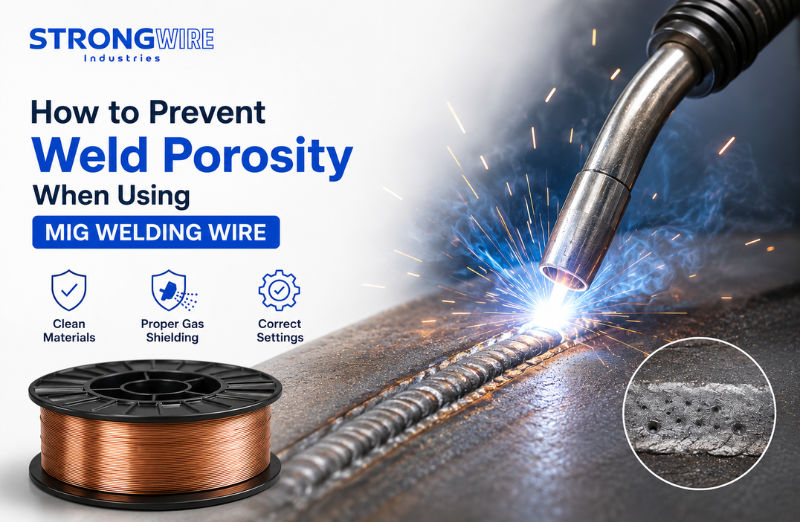
Weld porosity is one of the most common welding defects that can reduce weld strength, compromise appearance, and lead to costly rework. Whether you are working in fabrication, automotive manufacturing, construction, or heavy engineering, preventing porosity is essential for producing high-quality welds.
Using the right MIG welding wire, maintaining proper shielding gas coverage, and following correct welding practices can significantly reduce the chances of porosity. In this guide, we’ll explain what causes weld porosity, how to prevent it, and why choosing premium Solid Wires For MIG & TIG makes a difference in weld quality.
What is Weld Porosity?
Weld porosity refers to tiny gas pockets or cavities trapped inside the weld metal during solidification. These voids occur when gases fail to escape before the weld cools, resulting in weak spots that affect both the mechanical strength and appearance of the weld.
Porosity can be visible on the weld surface or hidden internally, making it a serious quality concern in industries where weld integrity is critical.
Why Preventing Weld Porosity Matters
Ignoring weld porosity can lead to several production and quality issues, including:
- Reduced weld strength
- Poor fatigue resistance
- Lower corrosion resistance
- Increased repair and rework costs
- Failed quality inspections
- Reduced structural reliability
- Unprofessional weld appearance
For manufacturers aiming to meet international quality standards, minimizing porosity should always be a priority.
Common Causes of Weld Porosity
Understanding the root causes helps eliminate the problem before it occurs.
1. Contaminated Base Metal
Oil, grease, rust, moisture, paint, mill scale, or dirt on the workpiece releases gases during welding.
Prevention
- Clean the surface thoroughly before welding.
- Remove rust, paint, and contaminants.
- Keep materials dry.
2. Poor Shielding Gas Coverage
Shielding gas protects the molten weld pool from atmospheric contamination. Insufficient gas flow allows oxygen and nitrogen to enter the weld.
Prevention
- Check gas flow before welding.
- Inspect hoses and regulators for leaks.
- Protect welding areas from wind or drafts.
- Keep the nozzle clean.
3. Low-Quality MIG Welding Wire
Inferior MIG wire may contain inconsistent chemical composition, excessive surface contamination, or poor copper coating, increasing the risk of porosity.
Prevention
Choose high-quality Solid Wires For MIG & TIG manufactured under strict quality control to ensure:
- Consistent wire diameter
- Smooth wire feeding
- Stable arc performance
- Low spatter
- Better weld penetration
- Reduced contamination
Working with trusted mig wire manufacturers helps improve weld consistency and productivity.
4. Moisture in Welding Materials
Moisture is a hidden source of hydrogen, which contributes to porosity.
Prevention
- Store welding wire in dry conditions.
- Keep wire sealed until use.
- Avoid exposing wire to humid environments.
- Use clean, dry shielding gas.
5. Incorrect Welding Parameters
Improper voltage, current, or travel speed can trap gases inside the weld pool.
Prevention
Adjust:
- Voltage
- Wire feed speed
- Travel speed
- Arc length
Follow the recommended settings provided for your specific MIG welding wire.
6. Dirty Contact Tip or Nozzle
Spatter buildup can disrupt shielding gas flow.
Prevention
- Clean nozzles regularly.
- Replace worn contact tips.
- Remove excessive spatter.
Routine maintenance improves weld consistency.
7. Excessive Stick-Out
Maintaining an incorrect electrode stick-out reduces shielding effectiveness.
Recommended Stick-Out
Typically maintain:
- 10–15 mm for short circuit transfer
- Follow manufacturer recommendations for other welding modes
Best Practices to Prevent Weld Porosity
Select Premium MIG Welding Wire
Using premium-quality MIG welding wire is one of the most effective ways to reduce porosity.
Look for wire that offers:
- Excellent arc stability
- Low hydrogen characteristics
- Consistent chemistry
- Smooth feeding
- Uniform copper coating
Reliable mig wire manufacturers invest in advanced production processes and strict quality testing, resulting in superior welding performance.
Maintain Proper Gas Flow
Too little gas allows contamination.
Too much gas creates turbulence.
Always verify:
- Correct gas flow rate
- Proper nozzle size
- Leak-free gas system
Keep Everything Clean
Cleanliness directly impacts weld quality.
Always clean:
- Base metal
- Welding nozzle
- Contact tip
- Ground clamp
- Wire feed system
Store Welding Wire Properly
Protect MIG wire from:
- Humidity
- Dust
- Oil
- Water
- Corrosion
Proper storage extends wire life and improves weld quality.
Inspect Equipment Regularly
Routine inspections reduce unexpected welding defects.
Check:
- Wire feeder
- Drive rolls
- Contact tips
- Gas hoses
- Regulators
- Torch liner
Preventive maintenance saves production time.
Choosing the Right Solid Wires For MIG & TIG
Not every welding application requires the same wire.
Selecting the correct Solid Wires For MIG & TIG depends on:
- Base metal
- Material thickness
- Welding position
- Shielding gas
- Mechanical property requirements
- Production environment
Consult experienced mig wire manufacturers for recommendations based on your application.
Signs Your Weld May Have Porosity
Inspect your welds for these warning signs:
- Small holes on the weld surface
- Bubble-like appearance
- Irregular weld bead
- Weak mechanical performance
- Failed non-destructive testing (NDT)
Early detection reduces repair costs.
Quick Checklist Before MIG Welding
Before striking an arc, verify:
This simple checklist helps produce cleaner, stronger welds consistently.
- Clean base material
- Dry welding wire
- Correct shielding gas
- Proper gas flow
- Clean nozzle
- Correct wire feed speed
- Stable voltage
- Proper travel speed
- Correct stick-out
- Good ground connection
Why High-Quality MIG Wire Makes a Difference
High-performance MIG wire contributes to:
- Better weld appearance
- Lower porosity
- Stable arc
- Reduced spatter
- Improved deposition efficiency
- Higher productivity
- Less downtime
- Lower repair costs
Investing in premium welding consumables often results in significant long-term savings.
Conclusion
Preventing weld porosity starts with understanding its causes and implementing proper welding practices. Clean materials, adequate shielding gas, correct machine settings, and regular equipment maintenance all play vital roles in producing defect-free welds.
Equally important is selecting premium Solid Wires For MIG & TIG from reliable mig wire manufacturers. High-quality MIG welding wire ensures stable arc performance, cleaner welds, reduced porosity, and improved overall productivity. By following these best practices, manufacturers can achieve stronger, more reliable welds while minimizing rework and production costs.
CTA
Looking for premium Solid Wires For MIG & TIG with consistent quality and reliable performance? Explore our range of high-performance MIG welding wire solutions designed to deliver cleaner welds, reduced porosity, excellent arc stability, and higher productivity for industrial welding applications.