
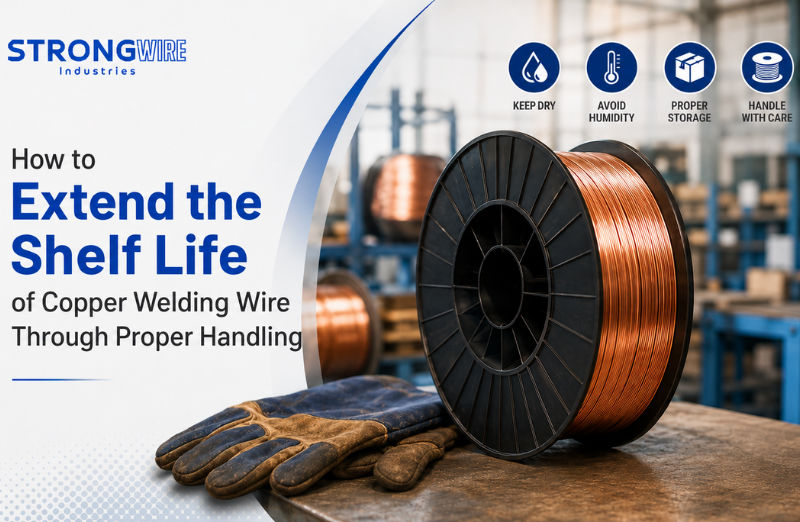
Welding wire is an essential part of many fabrication, construction, automotive, engineering, infrastructure, and manufacturing operations. However, even high-quality welding wire can lose its performance when it is exposed to moisture, contaminants, improper temperatures, or poor handling conditions.
For manufacturers, fabricators, distributors, and professional welders, protecting welding consumables is not simply a storage issue. It directly affects weld quality, productivity, material waste, rework, and operating costs.
Proper handling can help maintain the condition of MIG welding wire, reduce contamination, and ensure that welding materials perform consistently when they reach the production floor.
This guide explains practical ways to extend the usable shelf life of welding wire and protect its performance from purchase through application.
What Determines the Shelf Life of Welding Wire?
The shelf life of welding wire depends on several factors, including wire composition, surface condition, packaging, storage environment, transportation, and handling practices.
Unlike some products that have a simple fixed expiry date, welding wire performance is often influenced by how the product is stored and maintained after manufacturing.
The main factors affecting shelf life include:
- Exposure to moisture and humidity
- Condensation and temperature fluctuations
- Dust, oil, grease, and other contaminants
- Damaged or opened packaging
- Improper storage position
- Long-term exposure to the atmosphere
- Poor inventory rotation
- Incorrect handling during transportation
For industrial buyers, this means purchasing from a reliable welding wire manufacturer is only one part of quality management. Proper storage and handling throughout the supply chain are equally important.
Why Proper Handling of Welding Wire Matters
The surface condition of welding wire plays an important role in welding performance. Contaminated or improperly stored wire can contribute to inconsistent arc behavior, feeding problems, spatter, porosity, and other weld defects.
For high-volume industrial operations, even a small deterioration in consumable quality can become expensive.
For example, a manufacturer using several hundred kilograms of wire every month may experience significant losses if improperly stored consumables lead to:
- Increased weld rejection
- Additional grinding and rework
- Production delays
- Wire feeding problems
- Higher consumable consumption
- Unplanned equipment maintenance
- Reduced operator productivity
Proper handling therefore protects both welding performance and the overall economics of production.
1. Store Welding Wire in a Dry Environment
Moisture is one of the biggest concerns when storing welding consumables.
Welding wire should ideally be stored in a clean, dry, controlled environment away from direct exposure to rain, water, condensation, and excessive humidity.
Avoid storing wire:
- Near open doors or windows where moisture can enter
- Directly on concrete floors
- Near washing areas
- Near chemical storage
- In locations with frequent temperature fluctuations
- Outdoors without appropriate protection
For industrial warehouses, using pallets or racks keeps cartons, drums, and spools away from direct floor contact and helps reduce the risk of moisture exposure.
2. Keep Original Packaging Intact
Original packaging is designed to protect welding wire during transportation and storage.
Whenever possible, keep the wire in its original packaging until it is required for production. Do not open multiple packages simply for convenience.
Once packaging has been opened, the wire becomes more exposed to atmospheric conditions and contaminants.
If only part of a spool is being used, protect the remaining material from dust and humidity before returning it to storage.
For distributors and industrial buyers, packaging integrity should also be checked when receiving shipments. Look for:
- Torn cartons
- Damaged drums
- Broken seals
- Signs of water exposure
- Rust or surface contamination
- Deformed spools
Any questionable material should be inspected before being released for production.
3. Control Temperature and Humidity
Temperature itself is not always the primary problem. Rapid temperature changes can create condensation, which may introduce moisture onto metal surfaces.
A stable warehouse environment is therefore preferable to a location where temperatures change dramatically between day and night.
Industrial storage areas should be:
- Dry
- Well ventilated
- Protected from weather
- Relatively temperature stable
- Free from unnecessary moisture sources
Where welding materials are stored for long periods, monitoring warehouse temperature and humidity can help identify unfavorable storage conditions before they affect inventory.
4. Handle MIG Welding Wire Carefully
MIG welding wire is commonly supplied in spools, drums, or other packaging formats depending on the application and consumption volume.
During handling, avoid dropping, dragging, or throwing spools. Mechanical damage can affect the spool, wire winding, or feeding performance.
When moving welding wire:
- Use appropriate lifting equipment for heavy packages.
- Avoid impact during transportation.
- Keep spools upright or in the manufacturer’s recommended position.
- Do not place heavy objects on top of wire packages.
- Protect the wire from oil, grease, dust, and water.
Careful handling is particularly important in automated or high-productivity welding operations, where consistent wire feeding is essential.
5. Prevent Oil, Grease, Dust, and Chemical Contamination
Welding wire should be protected from contaminants throughout its storage and use.
Oil and grease can contaminate the wire surface and potentially contribute to welding defects. Dust and airborne particles can also accumulate on exposed material.
Storage areas should therefore be separated from:
- Lubricants
- Cutting fluids
- Paints and coatings
- Chemicals
- Grinding operations
- Heavy dust-producing processes
Workers should also avoid touching exposed wire unnecessarily with dirty or oily hands.
Good housekeeping is a simple but effective way to protect the condition of welding materials.
6. Follow FIFO Inventory Management
Industrial buyers often purchase welding materials in bulk to secure supply and control procurement costs. However, storing large quantities without proper inventory rotation can create unnecessary risk.
A FIFO (First In, First Out) system helps ensure that older inventory is consumed before newer stock.
Warehouse teams can improve inventory control by recording:
- Product grade
- Batch or lot number
- Purchase date
- Quantity received
- Storage location
- Opening date
- Production usage
This is particularly useful for manufacturers and distributors handling multiple grades and sizes of welding wire.
Good inventory records also improve traceability if a quality issue occurs.
7. Inspect Wire Before Welding
Even properly stored material should be visually inspected before use.
Check the wire for:
- Rust or oxidation
- Discoloration
- Dirt or contamination
- Damaged packaging
- Deformed spools
- Irregular winding
- Signs of moisture exposure
If the wire shows significant deterioration, it should not automatically be sent into production.
For critical industrial applications, the quality team may need to evaluate the material against the applicable product specification and manufacturer’s recommendations before approving it for use.
8. Pay Attention to the Welding Environment
Shelf life doesn’t end when a spool is taken out of the warehouse.
The production environment can also affect welding wire condition.
For example, if an opened spool remains exposed overnight in a humid workshop, its surface can be affected even if it was previously stored correctly.
When practical:
- Keep unused wire covered.
- Avoid unnecessary exposure to workshop air.
- Protect open spools from dust and moisture.
- Return unused material to suitable storage after production.
- Keep welding equipment and wire feeding systems clean.
This is especially important in industries operating multiple shifts or maintaining open production areas.
9. Buy According to Actual Consumption
Purchasing in bulk can offer commercial advantages, but excessive inventory may increase storage risks.
Industrial buyers should balance bulk purchasing with actual consumption rates.
Before placing a large order, consider:
- Monthly wire consumption
- Warehouse capacity
- Storage conditions
- Product turnover
- Project duration
- Packaging size
- Lead time from the supplier
A reliable welding wire supplier can help buyers select appropriate packaging and ordering quantities based on application requirements.
For smaller workshops and B2C users, buying quantities that can realistically be consumed within a reasonable period can reduce unnecessary exposure after opening.
10. Choose a Reliable Welding Wire Manufacturer
Proper storage cannot compensate for poor-quality consumables.
The manufacturing quality of welding wire including surface condition, dimensional consistency, winding quality, packaging, and traceability can influence its performance throughout its usable life.
When selecting a welding wire manufacturer, buyers should consider:
- Manufacturing capabilities
- Product consistency
- Quality control systems
- Material traceability
- Packaging standards
- Technical documentation
- Application support
- Batch identification
- Industry experience
For B2B buyers, these factors can be especially important when welding consumables are used in safety-critical or high-volume applications.
Best Practices for Extending Welding Wire Shelf Life
A simple handling checklist can help warehouses and production teams maintain consumable quality.
| Best Practice | Why It Matters |
| Store in a dry area | Reduces moisture exposure |
| Keep original packaging intact | Protects the wire from contaminants |
| Use pallets or racks | Prevents direct floor contact |
| Control temperature fluctuations | Reduces condensation risk |
| Keep away from oil and chemicals | Prevents surface contamination |
| Use FIFO inventory | Reduces unnecessary long-term storage |
| Inspect before use | Identifies damaged material |
| Handle spools carefully | Prevents physical damage |
| Cover opened spools | Limits environmental exposure |
| Buy according to consumption | Prevents excessive inventory |
What Happens When Welding Wire Is Poorly Stored?
Poor storage practices can increase the possibility of welding problems and material waste.
Depending on the wire type and application, deterioration or contamination may contribute to:
- Unstable arc performance
- Poor wire feeding
- Increased spatter
- Porosity
- Weld quality inconsistencies
- Increased rework
- Higher consumable waste
The exact effect depends on the welding process, wire specification, environmental conditions, and severity of contamination. Therefore, suspected deterioration should be evaluated according to the manufacturer’s technical guidance and applicable welding requirements.
Conclusion
Extending the shelf life of welding wire is primarily about protecting its condition from the time it is received until the moment it is used.
For industrial manufacturers, distributors, fabricators, contractors, and individual welders, simple practices such as dry storage, intact packaging, careful handling, FIFO inventory management, contamination control, and pre-use inspection can make a meaningful difference.
The right approach also starts with choosing dependable welding consumables from an experienced manufacturer or supplier. Quality products combined with disciplined storage and handling can help businesses maintain consistent welding performance while reducing waste, rework, and avoidable costs.
For buyers evaluating welding supplies, the goal should not be simply to find the lowest purchase price. A better approach is to consider product quality, consistency, packaging, technical support, supply reliability, and total cost of ownership.