
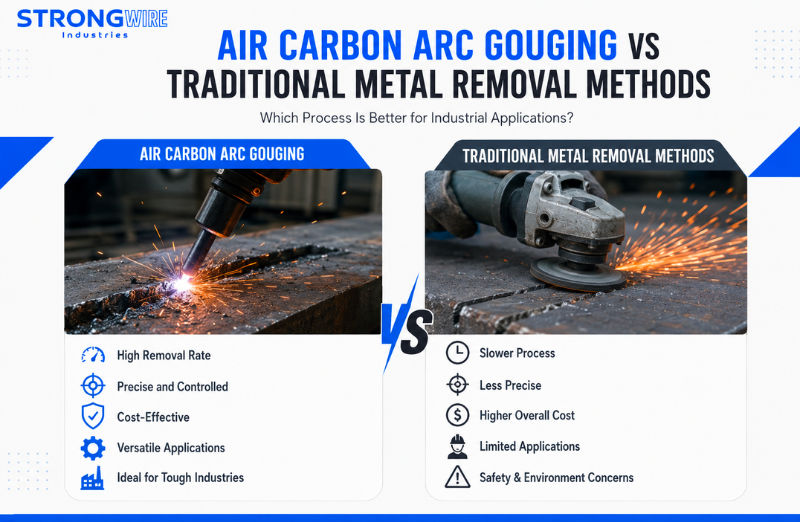
Air Carbon Arc Gouging vs Traditional Metal Removal Methods: Which Process Is Better for Industrial Applications?
Industrial metal fabrication, repair, and maintenance often require removing unwanted metal before welding, repairing defects, or preparing components for rework. Selecting the right metal removal process directly impacts productivity, operational costs, surface quality, and project timelines.
Among the available techniques, air carbon arc gouging has become a preferred choice across heavy industries because it offers fast, efficient, and controlled metal removal. Using a high-quality air carbon arc gouging electrode allows operators to remove defective welds, cracks, excess material, and damaged metal without replacing the entire component.
This article compares air carbon arc gouging with traditional metal removal methods to help engineers, procurement teams, fabrication shops, and industrial buyers determine which solution best suits their applications.
What Is an Air Carbon Arc Gouging Electrode?
An air carbon arc gouging electrode is a specially manufactured carbon and graphite electrode designed for removing metal through an electric arc and compressed air.
During operation:
- An electric arc melts the target metal.
- A high-pressure stream of compressed air immediately blows away the molten metal.
- The process creates a clean groove suitable for repair welding, weld removal, back gouging, or defect removal.
The electrode, often referred to as a carbon arc gouging electrode, enables precise and efficient metal removal while minimizing unnecessary damage to surrounding material.
Quick Definition
An air carbon arc gouging electrode is a conductive carbon electrode used with compressed air to rapidly remove molten metal for weld preparation, repair, and fabrication applications.
How Does an Air Carbon Arc Gouging Electrode Work?
The process combines electrical energy with compressed air.
The basic steps include:
- Connecting the gouging electrode to a welding power source.
- Striking an electric arc against the workpiece.
- Melting the metal with the intense arc.
- Using compressed air to eject molten metal from the groove.
- Producing a smooth channel ready for inspection or rewelding.
Unlike grinding or mechanical cutting, the process removes metal much faster while allowing operators to maintain better control over the removal area.
Traditional Metal Removal Methods
Before comparing the processes, it is helpful to understand the common alternatives.
Grinding
Grinding wheels remove material through abrasion. It is suitable for finishing, smoothing, and light weld removal but can be time-consuming for heavy stock removal.
Oxy-Fuel Cutting
Oxy-fuel cutting uses oxygen and fuel gas to cut steel. It works well for carbon steel but is less suitable for stainless steel, cast iron, and many non-ferrous metals.
Plasma Cutting
Plasma cutting delivers accurate cuts with high speed but is primarily designed for cutting rather than removing localized weld defects.
Mechanical Machining
Machining provides excellent dimensional accuracy but requires specialized equipment and longer processing times for repair applications.
Air Carbon Arc Gouging vs Traditional Metal Removal Methods
When comparing industrial metal removal methods, several performance factors should be considered.
Speed
Air carbon arc gouging removes large volumes of metal significantly faster than grinding and many mechanical processes. This helps reduce downtime during maintenance shutdowns and fabrication projects.
Material Compatibility
A quality carbon arc gouging electrode can be used on various materials, including:
- Carbon steel
- Stainless steel
- Cast iron
- Alloy steels
- Nickel alloys
- Some non-ferrous metals
Many traditional methods have material limitations.
Repair Efficiency
Removing defective welds without damaging surrounding material is critical in repair work. Air carbon arc gouging enables operators to remove only the defective area, reducing unnecessary rework.
Equipment Flexibility
The process requires:
- Welding power source
- Compressed air
- Gouging torch
- Air gouging rod
Compared with machining centers or specialized cutting equipment, setup is relatively straightforward for field and workshop applications.
Cost Effectiveness
Although compressed air and electrical power are required, the increased productivity often lowers the overall repair cost, especially on large industrial projects.
Benefits of Air Carbon Arc Gouging
Industries continue adopting this process because it delivers multiple operational advantages.
Faster Metal Removal
Large welds and thick sections can be removed quickly, helping reduce production delays.
Reduced Downtime
Maintenance teams can repair equipment faster, allowing production to resume sooner.
Versatile Applications
The process works across numerous metals and fabrication environments.
Improved Weld Preparation
Clean grooves improve accessibility for rewelding and inspection.
Better Productivity
Operators spend less time removing material compared with conventional grinding.
Lower Overall Maintenance Costs
Faster repairs often translate into lower labor costs and shorter shutdown periods.
How Air Carbon Arc Gouging Improves Industrial Performance
Industrial facilities focus on productivity, safety, and operational efficiency. Air carbon arc gouging contributes to all three.
For fabrication shops, it accelerates weld correction without interrupting production for extended periods.
For heavy equipment maintenance, it enables selective removal of damaged areas instead of replacing expensive components.
For power plants and steel mills, the process supports scheduled maintenance by minimizing equipment downtime.
When combined with high-quality electrodes from a reliable air gouging electrode manufacturer, consistent performance and longer service life can further improve operational efficiency.
Applications Across Industries
Air carbon arc gouging is widely used in numerous industrial sectors.
Shipbuilding
- Weld removal
- Hull repair
- Structural maintenance
Steel Fabrication
- Weld preparation
- Groove creation
- Joint modification
Mining Equipment
- Crack removal
- Heavy component repair
- Bucket restoration
Construction Equipment
- Excavator repairs
- Structural modifications
- Wear plate replacement
Power Generation
- Turbine maintenance
- Boiler repair
- Pressure vessel preparation
Oil and Gas
- Pipeline repair
- Structural fabrication
- Maintenance shutdowns
Factors to Consider Before Selecting an Air Carbon Arc Gouging Electrode
Choosing the correct electrode improves both productivity and weld quality.
Consider the following factors:
Electrode Diameter
Different diameters are suitable for different groove sizes and removal rates.
Material Type
Ensure the electrode is compatible with the base material.
Current Capacity
Select an electrode designed for the available welding current.
Compressed Air Supply
Proper air pressure is essential for effective removal of molten metal.
Manufacturing Quality
Purchasing from an experienced air gouging electrode supplier helps ensure consistent electrode density, conductivity, and performance.
Common Mistakes to Avoid
Avoid these common issues when performing air carbon arc gouging:
- Selecting the wrong electrode size
- Using insufficient compressed air pressure
- Maintaining incorrect torch angle
- Applying excessive current
- Ignoring equipment maintenance
- Using low-quality electrodes with inconsistent carbon composition
Proper operator training and quality consumables significantly improve results.
Why Industries Prefer Air Carbon Arc Gouging
Industrial users increasingly choose air carbon arc gouging because it offers an excellent balance of speed, versatility, and cost efficiency.
Key reasons include:
- High metal removal rate
- Suitable for multiple metals
- Faster weld repair
- Reduced labor time
- Lower maintenance downtime
- Excellent accessibility for difficult repair locations
- Reliable performance in heavy-duty applications
For large-scale industrial maintenance, the productivity gains often outweigh the operating costs compared with traditional removal methods.
Why Choose StrongWire?
Selecting the right supplier is just as important as choosing the right process.
StrongWire is focuses on delivering industrial-grade gouging consumables designed for demanding fabrication and maintenance environments.
Key advantages include:
- Consistent product quality
- Reliable manufacturing processes
- Custom manufacturing capabilities
- Technical product guidance
- Stable supply for industrial requirements
- Performance-focused quality control
- Customer-oriented support for industrial buyers
Working with an experienced air gouging rods manufacturer helps ensure consistent product performance across projects while supporting long-term operational efficiency.
Conclusion
When comparing air carbon arc gouging with traditional metal removal methods, the choice largely depends on the application. Grinding remains useful for finishing work, while plasma and oxy-fuel cutting serve specific cutting requirements.
However, for rapid weld removal, groove preparation, defect correction, and heavy-duty maintenance, an air carbon arc gouging electrode offers significant advantages in speed, versatility, and productivity.
By selecting high-quality electrodes from a trusted air gouging rods supplier, industrial facilities can improve repair efficiency, reduce downtime, and achieve more consistent results across fabrication and maintenance operations.